Mammoth Hunters
- 3.8
- Rating
- 1.00M
- Installs
- Free
- Price

 Analysis by App-foxy
I approached Mammoth Hunters expecting a compact action game built around a simple idea: face enormous prehistoric animals with stone spears, then help a small tribe become stronger. That premise is easy to understand, but the appeal comes from how it turns a short hunting session into a test of timing, positioning, and preparation. I found it most interesting when I stopped treating each encounter as a frantic attack and started thinking about when to throw, when to move, and when to protect the progress I had already made.
This is a free action game from KAYAC Inc., with a Teen content rating and support for Android devices running at least version 5.1. It has passed the early discovery stage with over one hundred thousand installs, while its average sits at 3.8 from roughly three hundred ratings. Those figures suggest a game that has found an audience but still divides opinion, which matches my impression: the central idea is immediately approachable, yet its simplicity will not suit everyone.
How the hunting loop feels in real play
The first thing I noticed is how quickly the game communicates its objective. There is no need to learn a complicated fantasy setting or manage a large collection of systems before getting to the action. The focus stays on giant beasts, primitive weapons, tribal growth, and the long-term goal of bringing down Mammoths. That directness makes it easy to pick up when I only have a few minutes available.
You May Also Like

 Blood Strike: 2.5 Anniversary
Blood Strike’s Loadouts Turn Every Drop Into a Tactical Gamble
A close look at Blood Strike’s custom loadouts: how fast access to signature weapons reshapes its battle royale rhythm, rewards preparation, and narrows the gap between fights.

 Pandora - Music & Podcasts
Pandora’s Music Is Easy to Start, but Harder to Recover
Pandora’s strength is its low-effort path from a seed to a station. Its weak spot is how much confidence it asks you to place in connection, setup, and quiet recovery.

 8 Ball Pool
 Is Built on Rivalries, Rematches, and Routine
A close look at the rivalries, rematches, shared routines, and unanswered safety questions that turn a quick pool match into a persistent mobile community.

 Samsung Music
’s Quiet Strength Is Playing What You Already Own
Its reach comes less from spectacle than from dependable access to a personal library. That simplicity is both the app’s strongest retention engine and its ceiling.

 AccuWeather: Weather Radar
AccuWeather Review: A Quick, Clear Forecast for Everyday Decisions
For everyday plans, the best forecast is the one you can understand quickly. AccuWeather makes rain timing, radar, and local conditions easy to act on, with a few trade-offs.

 Hill Climb Racing
Why Hill Climb Racing Still Turns Crashes Into One More Run
A tiny car, a bumpy hill and one more upgrade: Hill Climb Racing keeps resurfacing because its simple chaos makes every near-miss feel personal.
More From Our News Desk



The speed expectations are therefore different from those of a large, cinematic action game. I would not choose this title for elaborate exploration, deep character role-playing, or a long story campaign. Its strength is the immediate encounter. I can concentrate on the next threat, make a decision with the spear, and see whether my approach works without spending much time navigating menus or learning a dense ruleset.
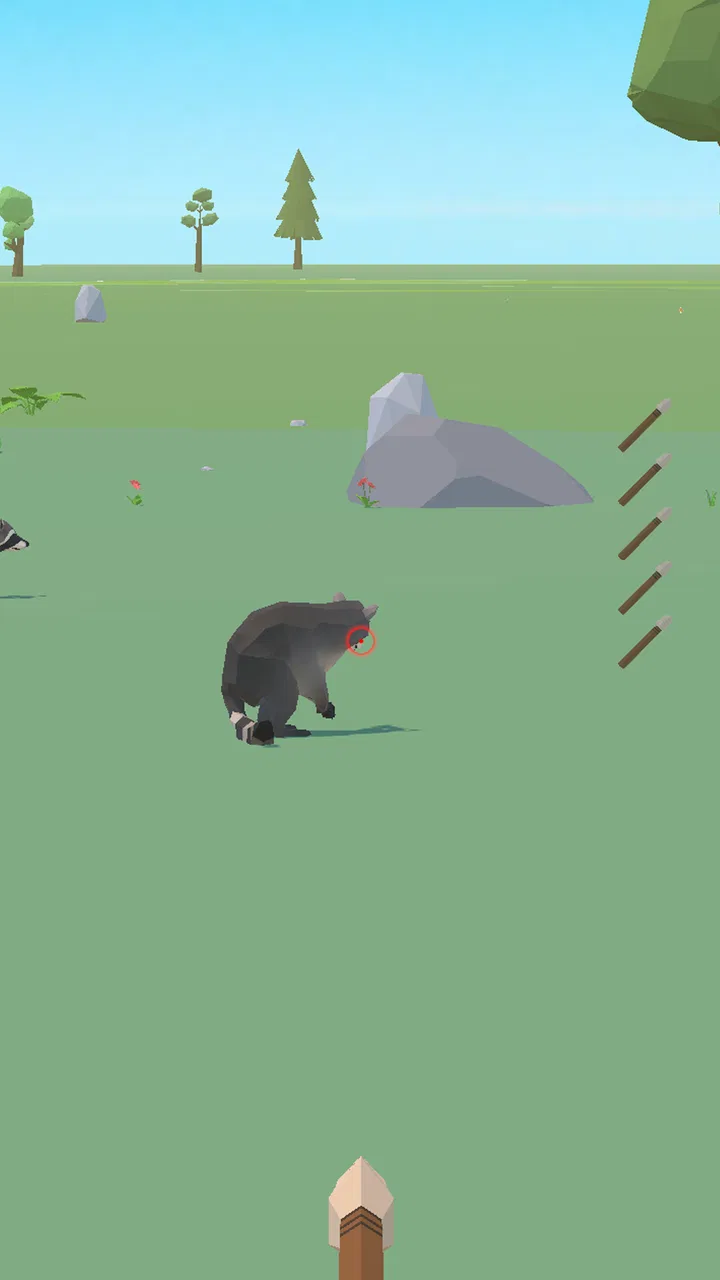
The stone spear is more than a visual theme. It gives the action a deliberate rhythm. A ranged attack feels less forgiving than simply standing close and tapping repeatedly, because I have to consider distance and timing. When a large creature is moving toward the tribe, throwing too early can waste an opportunity, while waiting too long can leave me reacting under pressure. That small tension is what gives the otherwise straightforward hunting loop some personality.
I also liked the way tribal growth changes the meaning of a successful hunt. The goal is not only to survive one encounter and move on. Progress feels connected to making the group more capable, so a failed attempt is frustrating in a useful way: it encourages me to reconsider how I am using the spear and how aggressively I am approaching the beast. The best results come from treating each hunt as a preparation exercise, not just a damage race.
Why the simple controls can still demand attention
A game with a small number of visible actions can be surprisingly demanding if every decision matters. Here, the limited prehistoric equipment makes mistakes feel noticeable. I cannot rely on a broad modern arsenal or a complicated ability bar to solve every problem. That gives the encounters a clear identity, but it also means players who prefer constant visual spectacle may find the action restrained.
My practical advice is to resist the urge to throw immediately whenever a target appears. I had better results by watching the movement first and using the attack when the beast’s position made the hit more worthwhile. This is a small habit, but it changes the game from random tapping into a basic timing challenge. It also helps conserve attention during longer sessions, because I am making fewer rushed decisions.
Another useful approach is to separate progress from pride. If a hunt starts badly, repeating the same aggressive pattern usually does not help. I found it more sensible to use the encounter to identify the moment where control was lost, then adjust one thing at a time. That makes the game more approachable for players who enjoy learning through repetition, while those looking for effortless victories may become impatient.
What happens when sessions become heavier
The light premise makes the game suitable for short play, but heavy use changes the experience. Repeated hunts place more emphasis on consistency than on the novelty of the first encounter. After the initial excitement of facing giant animals, the question becomes whether the core loop remains satisfying when I am pursuing further tribal growth rather than simply discovering the concept.
In those longer stretches, the most important resource is my attention. The game’s primitive setting does not overwhelm me with information, which is helpful, but it also means the action has fewer layers to distract from repetition. I would play it in focused bursts rather than leave it running through a long session. That approach keeps the spear timing fresh and reduces the chance that the straightforward structure starts to feel routine.
A realistic everyday use case is a short break between errands or a few minutes before an appointment. I can begin with a clear objective, attempt a hunt, and stop without needing to remember a complicated chain of quests. It is also a reasonable choice for someone who wants an action game that can be understood quickly by another person watching over their shoulder. The prehistoric theme and giant targets explain themselves immediately.
For a longer evening session, my expectations would be more cautious. Players who enjoy gradual improvement and repeating a focused challenge may stay engaged, especially if they like testing timing. Players who need frequent new environments, elaborate equipment choices, or a strong narrative reason to continue may feel that the loop becomes narrow. That is not a technical failure; it is a question of how much variety a player expects from an action game.
One trade-off is that the game’s clarity can also expose its limits. There is little ambiguity about what I am doing, which makes the early experience friendly. At the same time, a simple objective leaves less room for discovery once I understand the basic rhythm. I would recommend treating it as a focused hunting game rather than expecting it to replace a broader action adventure.
Stability, recovery, and the practical side of playing
My reliability judgement is necessarily tied to the kind of game this is. A compact action design has an advantage: there are fewer separate systems competing for attention during a hunt. When the experience works well, I can focus on the target and my next throw instead of managing a complicated interface. That simplicity is valuable on a phone, where interruptions and limited screen space are common.
Recovery is also part of the appeal. If I put the game down after an attempt, the basic premise is easy to remember when I return. I do not need to reconstruct a large story or recall a long sequence of objectives. The next session can begin with the same practical question: how can I handle the next giant beast more effectively? That makes the title more forgiving for irregular players than games that demand daily attention to remain understandable.
Still, a simple recovery loop does not remove the frustration of a failed hunt. Because the action revolves around a small set of decisions, a mistake can feel personal rather than hidden inside a complex system. I found that useful when I was in the mood to improve, but less enjoyable when I wanted something relaxing. The game rewards concentration, so it may not be the best choice when I am tired or trying to play while distracted.
The current version is 002, and the game is free to start. I would keep those details in mind when deciding how seriously to commit. The absence of an upfront price makes experimentation easy, but free access alone does not guarantee that the experience will match every player’s preferred pace. I would try a few hunts first and judge whether the timing and repetition feel satisfying before making it a regular part of my game rotation.
Device limits and what they mean for expectations
Support for Android 5.1 gives the game a broad technical entry point compared with titles that require a recent operating system. That is useful for people using an older phone who still want to try a current action release. However, a low minimum operating-system requirement should not be mistaken for a promise that every device will feel equally comfortable during play.
On an older or modest handset, I would pay attention to how quickly the game responds during busy moments involving a large creature and several actions. Precise timing matters more here than in a slow puzzle, so even a small feeling of delay can affect the outcome. I would also avoid judging the game solely by its ability to install; the more important question is whether the device keeps input feeling dependable when the encounter becomes intense.
Resource demands are best considered through the lens of session length. A short attempt is a sensible starting point for any phone, especially if it is already handling several background tasks. Closing unused apps and keeping the device from becoming excessively warm are ordinary precautions, but they matter more in an action title where responsiveness is part of the challenge. I would not begin with a long uninterrupted session on an older device before seeing how it behaves.
The same advice applies to storage and battery expectations: I would leave practical room for the game and watch how the phone reacts during repeated play rather than assume that the small, simple premise tells the whole story. The game’s visual concept may look less demanding than a large three-dimensional adventure, but perceived performance is still shaped by the phone, its age, and what else is running.
For readers choosing between this and a more elaborate action alternative, the decision is straightforward. A larger game may offer richer environments, more complex progression, and greater visual variety, but it can also place heavier demands on the device and require more time to recover the thread of play. Mammoth Hunters is the better fit when I want a focused prehistoric challenge that gets to its central action quickly. The alternative is better when depth and variety matter more than immediate access.
Who will enjoy the tribe-and-mammoth premise
I think the game works best for players who like clear goals and small improvements. If you enjoy noticing that a better-timed throw produces a more controlled encounter, the primitive weapon setup gives you something concrete to practice. The tribe-growth element adds a reason to continue beyond a single victory, while the Mammoth objective supplies a memorable target rather than a generic collection of enemies.
It is also a good candidate for someone who does not want to study a long tutorial before playing. The concept is understandable from the first moment: hunt, survive, strengthen the tribe, and work toward the largest threat. That makes it approachable for casual action players and for people who usually avoid games with extensive menus or role-playing statistics.
I would skip it if my priority were a deep campaign, a wide arsenal, or a highly varied world. I would also look elsewhere if I wanted a calm game that asks very little concentration. The spear-based encounters are simple, but they are not entirely passive. Players who dislike repeating attempts to improve timing may find the structure too narrow, especially after the novelty of the prehistoric setting fades.
The Teen rating is worth noting for families deciding whether it is suitable for a younger player. The rating places it above a purely child-focused game, so I would check the device and household expectations before handing it over. For a teenager or adult who enjoys action without needing a complex narrative, the premise is easier to recommend.
Small techniques that make the experience better
My first practical technique is to use the opening moments of a hunt as observation time. Rather than immediately trying to finish the encounter, I watch how the target approaches and identify the safest moment to commit. This reduces wasted throws and makes the action feel more deliberate. It is especially useful when I am returning after a break and need to regain the rhythm.
Second, I would connect every failed attempt to one specific adjustment. Changing everything at once makes it difficult to understand what helped. If the problem was poor timing, I would focus on timing in the next attempt; if the problem was standing in an unsafe position, I would change that first. This turns repetition into a learning process instead of a cycle of frustration.
Third, I would use tribal growth as a reason to pace myself rather than rush. Progress can tempt me to push through several hunts in one sitting, but the game’s focused loop is easier to appreciate when I stop before my attention drops. Short sessions also make the return experience cleaner, because I remember the central objective without feeling that I have been grinding for too long.
These habits are not hidden menus or complicated exploits. They are ways of reading what the game is asking from me. The title does not need a large collection of mechanics to create tension; it uses the contrast between a vulnerable hunter, a basic stone spear, and an oversized animal. Understanding that trade-off is more valuable than searching for a shortcut.
My performance verdict after weighing the trade-offs
From a performance perspective, I see this as a focused mobile action game rather than a demanding showcase title. Its strongest speed advantage is the clarity of its objective: I can move into the hunting mindset quickly, and returning after an interruption is uncomplicated. The main perceived burden is not a huge amount of content on screen, but the need for responsive timing when a mammoth or another giant beast turns a simple encounter into a pressure moment.
On a compatible device running Android 5.1 or later, I would start with short sessions and judge responsiveness during the busiest part of a hunt. That is more useful than assuming the minimum operating-system requirement guarantees identical results across every phone. If input feels reliable and the repetition motivates me to improve, the game earns a place as a convenient action break. If the controls feel delayed or the loop becomes repetitive quickly, no amount of tribal progression will fully solve that mismatch.
My overall view is positive but specific. KAYAC Inc. has built a game with a memorable hook, an accessible premise, and enough timing pressure to keep the stone-spear idea from feeling completely shallow. The free price makes it easy to test, and the established install base shows that it is not an obscure experiment. Yet the 3.8 average also feels understandable: the same focused structure that makes it approachable can make it feel limited for players seeking breadth.
Mammoth Hunters is worth trying if you want quick prehistoric action, clear progression, and a challenge based on choosing the right moment rather than managing a huge arsenal. I would recommend it to a friend who enjoys compact hunting encounters and does not mind repeating a situation to improve. I would not recommend it as a substitute for a full-scale action adventure. Its best use is narrower and more honest: a direct, easy-to-return-to game for testing your timing against giant beasts and helping a small tribe grow one successful hunt at a time.
FAQs for Mammoth Hunters
01What is Mammoth Hunters and how does it work?
Mammoth Hunters is a fitness app designed to provide users with personalized workout routines and nutritional guidance. It uses a combination of bodyweight exercises and a paleo diet approach. The app tailors its programs based on your fitness level, goals, and available time, ensuring that you can effectively work out anywhere, anytime.
02Is Mammoth Hunters suitable for beginners?
Yes, Mammoth Hunters is suitable for all fitness levels, including beginners. The app offers customizable workout plans that adapt to your individual fitness level. It starts with basic exercises and gradually increases in intensity, allowing beginners to build strength and endurance over time without feeling overwhelmed.
03Does Mammoth Hunters require any special equipment?
No special equipment is required to use Mammoth Hunters. The app focuses on bodyweight exercises, which means you can perform the workouts using just your body. This makes it an excellent choice for those who prefer to exercise at home or on the go, without needing to invest in gym equipment.
04How does the nutritional guidance in Mammoth Hunters work?
Mammoth Hunters provides nutritional guidance based on a paleo diet approach, which emphasizes whole foods and excludes processed items. The app offers meal plans, recipes, and tips to help you make healthier food choices. It aims to simplify nutrition by providing practical, easy-to-follow advice that complements your fitness routine.
05Is Mammoth Hunters available on both Android and iOS?
Yes, Mammoth Hunters is available for download on both Android and iOS platforms. You can find it on the Google Play Store for Android devices and the App Store for iOS devices. The app is designed to work seamlessly across different devices, ensuring you have access to your fitness program wherever you are.
Pros
- Intuitive workout plans tailored to user goals.
- Engaging storytelling enhances workout motivation.
- Offline mode available for workouts anywhere.
- Supports a variety of fitness levels and goals.
- Regular updates keep content fresh and relevant.
Cons
- Limited customization of workout routines.
- Some features locked behind a paywall.
- In-app ads can be distracting during sessions.
- Initial interface may seem complex to beginners.
- Requires account creation to access full features.

Mammoth Hunters
Gallery